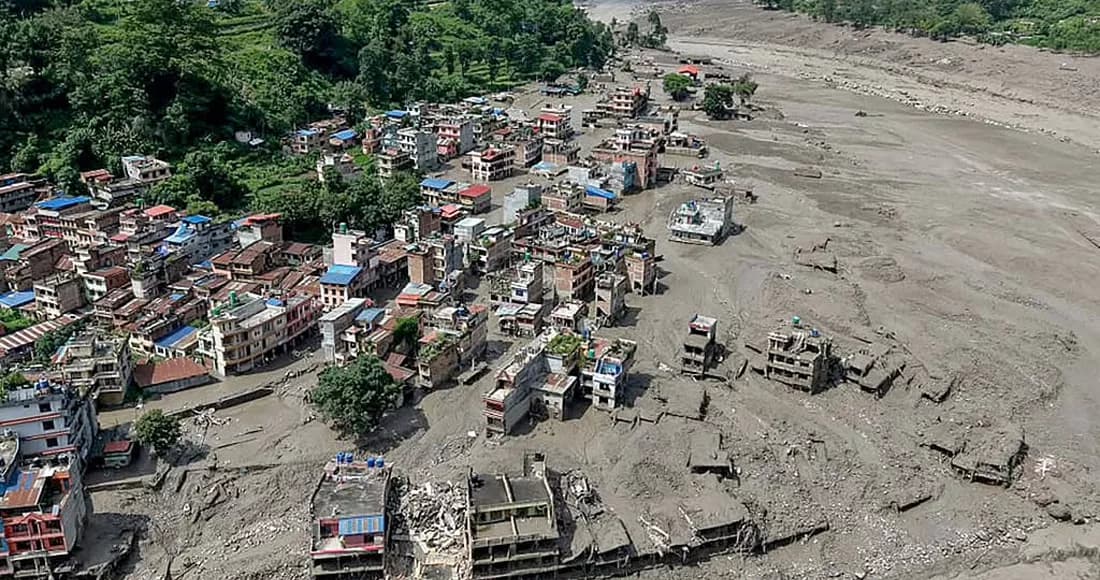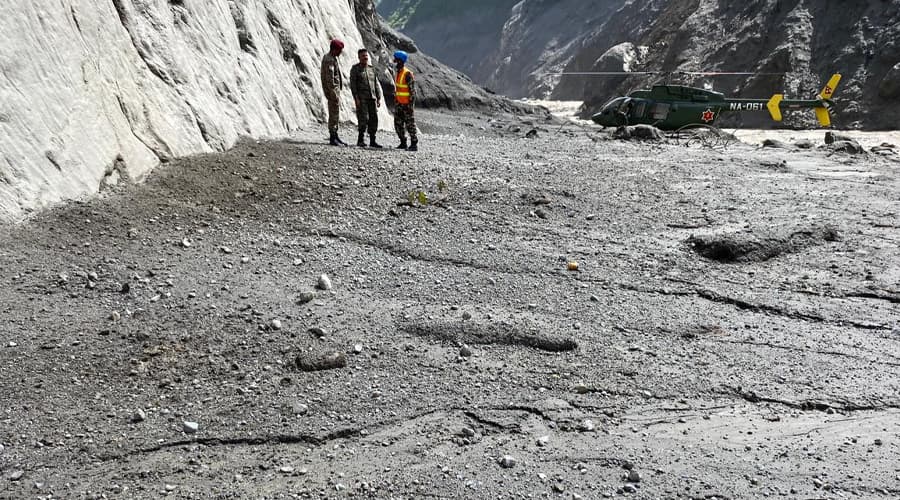
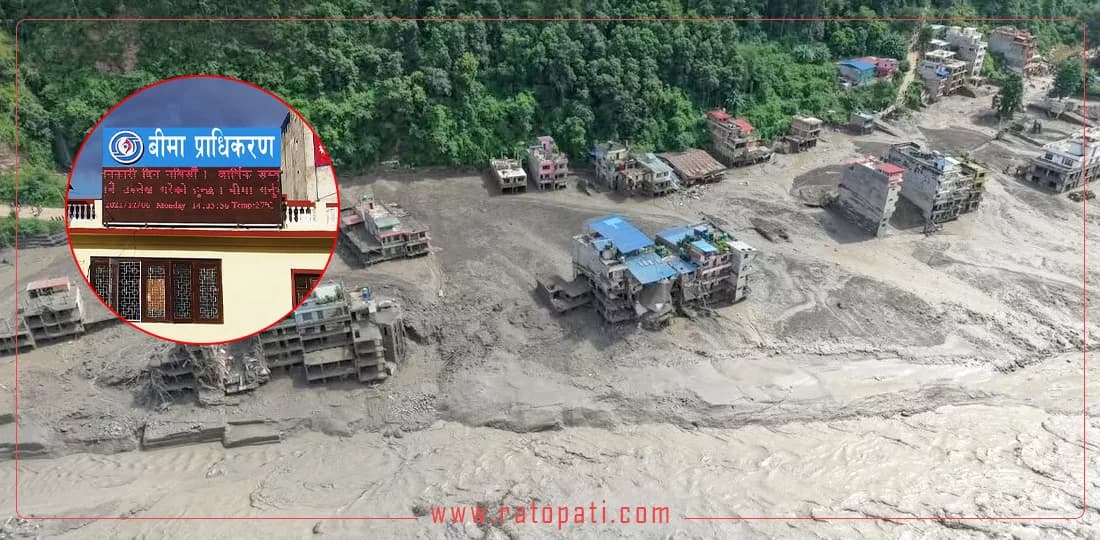
Kathmandu. The devastating floods in Bhotekoshi and Trishuli rivers on 10th August have devastated the geography from Rasuwa to Dhading via Nuwakot. Even on the 10th day after the flood, the search and rescue operations for the missing are continuing. More than 13,000 people have been rescued so far.
5 thousand 83 affected by flood are still missing. One thousand 287 people have died. Thousands of people have become homeless due to floods and physical infrastructure worth billions has been damaged.
In particular, there has been unimaginable damage to hydropower projects, public infrastructure and private property.
The government has decided to give advance payment to the insured affected by the Rasuwa flood. On Thursday, it said that the government will arrange advance payment through the Rasuwa flood recovery package. Based on the initial assessment report, the insurer has arranged to provide a maximum of fifty percent advance claim payment to the insured who claims the damage insurance.
Preliminary picture after flood: 25.87 billion claims
According to the Insurance Authority, as of Monday, August 15th, preliminary insurance claims worth 25 billion 873 million 35 lakh 79 thousand rupees have been filed in various insurance companies. The authority said that this claim came from a total of 583 insurance policies.
Looking at the details of the damage, the largest burden is seen on the Oriental Insurance. According to the authority, a claim of 13.4 billion 21 lakh rupees has been made in this company alone through 8 insurance policies.
Similarly, claims of 4.97 billion 48 lakhs in United Azod Insurance, 2.10 billion 28 lakhs in Sanima GIC Insurance and more than 1.80 billion rupees in Siddharth Premier and Shikhar Insurance.
Claims for micro insurance and health insurance have also started. One claim of 5 lakhs has been registered in Nepal Micro Insurance, while a claim of 41 lakh 60 thousand rupees has been registered for health insurance.
80 percent of the claims are in the engineering sector
The flood that occurred in Bhotekoshi on August 10 caused the biggest damage to the country's energy and construction sectors. According to the statistics of the authority, about 80 percent of the total claim amount is occupied by engineering and contractor risk insurance.
An initial claim of 20 billion 500 million 779 million rupees has been made from only 52 insurance policies. 80 percent of the claims are from engineering and contractors only. It also seems to have caused great destruction to the under-construction and operating hydropower projects.
Similarly, in property insurance 2 billion 34 crore 62 lakh 20 thousand rupees from 113 insurance articles, in motor insurance 1 billion 55 crore 9 lakh 39 thousand rupees from 313 insurance articles, in transport insurance 897 crore 77 lakh 37 thousand rupees from 47 insurance articles and in others 52 crore 92 million rupees.
Can insurance companies bear this unimaginable burden of flooding?
Experts say there is nothing to be afraid of.
According to Rajendra Malla, President of Prabhu Insurance, Nepali insurance companies bear only a few percent of the risk. The rest of the risk is transferred to international and domestic reinsurance companies.
"In non-life insurance, companies keep only 30 to 35 percent of the risk with themselves," said Malla, "so when there is a big claim, money comes from abroad." There is no burden on the companies here.
The president of the Life Insurance Association, Satchi Poudel, also claims that the Nepali insurance sector is experienced in managing such disasters. He is confident that the current crisis will also be resolved due to the experience of paying 20 billion rupees during the earthquake. We have experience of earthquakes and big floods. We are able to make quick payments by deputing surveyors after claims are received,” he said.
Spokesperson of the authority, Pujan Dhungel, said that the Nepal Insurance Authority is now planning to give blanket consent and deploy surveyors through an automated system to make claim payments more efficient. According to him, a special task force has also been formed in the Insurance Authority for daily monitoring.
Triangular breakdown of catastrophe insurance claims, claims in billions, payouts in crores
Comparing past major disasters and current flood claims, the volume of challenges facing Nepal's insurance market is even more evident. However, experts in the insurance sector say that there is no problem for insurance companies as they have been through many such disasters in the past.
According to them, the pressure has increased on insurance companies to pay claims for damage caused by the Great Earthquake of 2072, Genji movement and other physical infrastructure.
Every year there are constant big disasters. Disasters continue to occur after the earthquake. In the 2072 earthquake, a total of 20 billion rupees worth of claims were paid, but in last year's Genji movement, 23.44 billion rupees were claimed. The initial claim of the current flood has exceeded 25 billion 87 million, which is more than the previous two incidents.
The great earthquake that occurred on Chait 12, 2072 had caused great loss of human wealth. After the Great Earthquake, 17 thousand 796 insurance claims worth Rs.
After the surveyor's assessment, 11,616 claims worth 16,260,920,000 rupees were found to be payable. But the devastating earthquake that happened on 12th Baisakh, 072 caused a lot of human and economic losses.
11.64 percent of the insurance claims after earthquake damage were not paid. Of the amount claimed in the earthquake, 14 billion 374 million rupees have been paid, but it is said that about 1 billion 89 million 44 million rupees have not been paid.
After the earthquake, the highest number of fire insurance claims were made. Out of total claims worth Rs 10.17 billion 62 crores, after the survey, claims worth Rs 99.65 billion 48 lakhs were deemed payable. For claim payment, 9.81 billion rupees were paid from the reinsurance company and the remaining 4.56 billion 39 million rupees were paid from the insurance companies of Nepal.
Likewise, the damage caused during the Genji movement on August 23 and 24 last year was greater than the earthquake. Claims of 23 billion 20 crore 91 lakh rupees were made in non-life insurance companies. Out of a total of 3,303 claims, only 5.18 billion rupees (18.71 percent) have been paid so far.
According to the authority, claims of 25.87 billion have already been made after the flood on August 10. It is seen that this event will prove to be more expensive than both the earthquake of 2072 and the Genji movement. In the earthquake, insurance companies paid 20 billion, but the current claim is sure to go much higher than that limit.
Claims and payment gap: Why is it late to get money?
As one year of the Genji movement approaches, only 18.71 percent of the total claims, i.e. 5.18 billion rupees, have been paid. Only about 85 percent of earthquake claims were paid.
There is always a big gap between the insurance claim and the actual payment. According to Pujan Dhungel, the spokesperson of the Insurance Authority, the insured initially claims the value of the property on the basis of estimated value, so the amount appears to be large. "The claimed amount is just an initial information," she said, "Actual payment is made only on the basis of the surveyor's report, actual proof of damage and necessary documents."
In the case of the Genji movement, more than 17,900 claims have been registered, but only 53 claims have been fully paid, according to the insurance authority. In the case of engineering insurance, the deadline for submitting the report within 60 days is not applicable and due to under insurance disputes, big claims have been delayed for years. According to the authority, the insurance payment is stopped due to the problem of insuring less than the real value of the property and making too many claims.
Rajendra Malla, chairman of Prabhu Insurance, said that there is no need for insurance companies to be afraid of claims of billions. According to him, Nepali insurance companies have limited liability and send about 70 percent of the risk to domestic and foreign reinsurance companies.
Money comes from abroad to pay claims. Therefore, there is no need to fear," he said. Of the 14.37 billion rupees paid after the earthquake, 9.81 billion rupees came from reinsurance companies.
Currently, Nepal Re-Insurance and Himalayan Re-Insurance are operating in Nepal, which again share the risk with foreign retro-cession companies.
Social responsibility and government apathy
Despite this, the level of awareness and access to insurance in Nepal is worrying. According to Chairman Malla, to insure a house worth Rs 1 crore, it costs only Rs 4,000 per year. However, people do not voluntarily insure their homes, except when taking a loan from a bank. "Now many house owners who have been swept away by the flood are not getting compensation because they are not covered by insurance," he added.
Similarly, the state suffered a major setback due to the non-insurance of public property during the Genji movement. Although large private sector businesses like Bhatbhateni, Hilton Hotel, Labim Mall were protected against damage due to insurance, government structures were deprived of that facility.
7,570 private houses were completely damaged in the Rasuwa flood. According to the department, a total of 3,977 houses have been damaged in Nuwakot.
What to learn from Bhotekoshi flood?
The devastating flood of August 10 has given a message. Disaster does not come with a trumpet. Even though Nepal's insurance market is maturing due to the earthquake, Genji movement and the current flood, there is still a lot of work to be done in expanding the scope of insurance and procedural delays.
As long as there is no compulsory insurance of public property and as long as the general public does not see home insurance as a security and not an expense.
Until then, after every disaster, the financial situation of the state and the citizens will continue to be the same. 25 billion claims have added liability to insurance companies and created a strong pressure on the state for policy reforms.
How quickly the insurance companies' commitment to 'fast track' payment will be seen in practice, only the time of the relief that the flood victims will get will tell.