In March, my father walked through Trisuli Bazar, entering shops, greeting passersby, and shaking hands with past schoolmates, childhood friends and acquaintances. He had a spring in his steps.
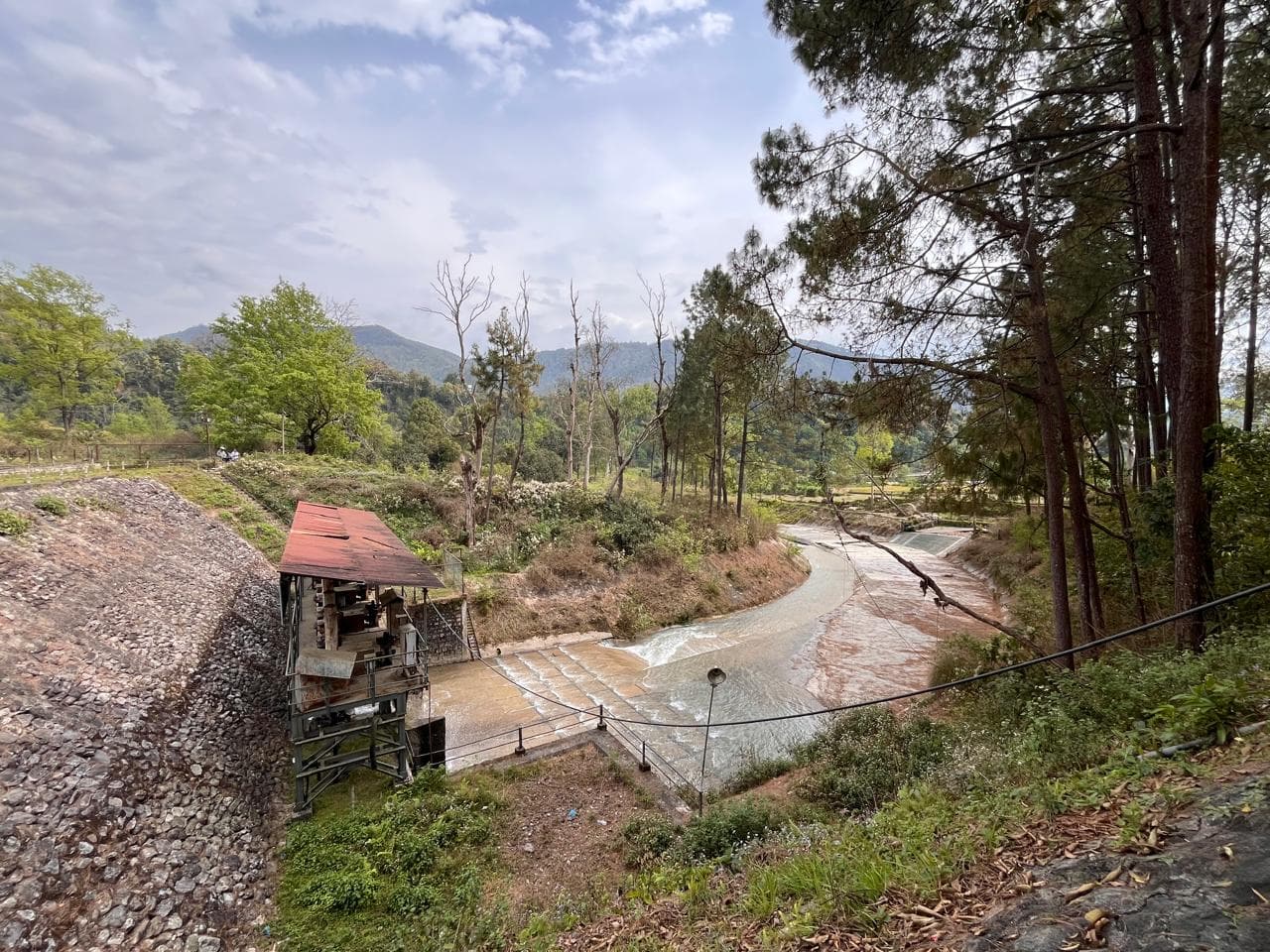
My father, Baa, had not been back for over five decades since he finished school there and returned to his Kathmandu home. My grandparents were based in Trisuli almost their entire working lives: my grandmother, a staff nurse at the Trisuli Hospital and my grandfather, a supervisor at the Trisuli Hydropower Station.
Baa often wonders why his parents moved to Trisuli, abandoning the comfort of their Kathmandu life. Life in Trisuli meant walking in scorching heat on mostly hilly terrain to get to work, school, hospital, or market. The bazar overlooking the river it takes its name from, is backed by settlements sprawling on the hills above.
The main Bazar was wiped out by the flood on 26 August. Five months earlier, we had been eating lunch around a big dining table at my great aunt Nini-Aji’s home. The sound of Trisuli River 30m away was the background score.
Mamu asked Nini-Aji if she ever feels scared to sleep with the river so close. She said she was so used to the sound, she would miss it if she went to Kathmandu.
“The river must come all the way up in monsoon?” Mamu said. “It does but never all the way up.”
Last Wednesday, when we heard about the flood our first concern was Nini-Aji, who is 86 and uses a walker. It was several hours before we found out she had been removed from her home quickly by someone who offered to drive her to higher ground.
She and many others were moved to Trisuli Colony which was built when the hydropower station was being constructed with Indian assistance in 1967.
My father and his siblings spent a big part of their childhood at the Colony because of their parents’ jobs. As a child, I would be bussed off to Trisuli during winter holidays. It was warmer than Kathmandu. Days were slow.
My grandparents lived in one of the semi-detached apartments with a spacious front porch and a big back yard where they grew vegetables and fruits. There was always papaya, guava, and sugarcane. In winter, we ate oranges and peanuts in the sun. A man who wore a turban carried a big dekchi on his head, bringing around khuwa and gundpak to sell. The rice came from fields nearby, as did the dal and there was enough fish from the river.
A musician who moonlighted as supervisor, my grandfather would play his sitar in the drawing room in evenings. Occasionally, a friend from the bazar would join him on the tabla and the house would reverberate with their dual melody. Trisuli life was slow and without distractions. I suppose that is why my grandparents had chosen it over Kathmandu.
On every trip, I would carry loaves of bread from Kathmandu. Trisuli did not have a bakery then. In return, they would pack my bag with all kinds of koseli. At the bus stand at the bazar, my father’s childhood friend Khursheed Kaka would run up to the bus window and hand me a bunch of bangles. The prettiest bangles I ever wore.
There was no more Khursheed Kaka when we visited in March, but we did meet some of Baa’s other Muslim schoolmates. When they opened their mouths to greet each other, they spoke Newa with an impeccable Kathmandu accent. We also ran into Pradeep uncle, who performs as the Lakhey during Janai Purnima. There were other friends Baa sat down with, holding hands, saying he would come back for a longer visit, not knowing at the time that a fateful day was on its way.
A former trading post for people from Rasuwa and Dhading, Trisuli Bazar had people from all backgrounds. The Ram Mandir, Tribhuvan Trisuli High School, the Mosque and the Vihar were all along the river. One could just sprint over and dive in.
In March, we talked to some students at the school hostel, who said they came from far flung villages in Nuwakot and Rasuwa. We made several stops at houses by the river, meeting Baa’s and Nini’s former schoolmates. During my visits as a child, Nini would sometimes take me to one of the video parlours where we would watch a Hindi film. Later, we would climb back to the colony, Nini singing songs from the film.
For Baa, Trisuli is synonymous to so much. It was where he bunked classes to go swimming and fishing in the river, where he first sat by the river professing his love to a school sweetheart, where he stole mangoes and guavas with siblings and friends, where he heard his first ghost story, and where many nights, he held the torch and followed his mother to the homes of villagers in pain.
For me, it was a summation of the memories of my family members who had lived there. On our recent trip, my mother kept marvelling at how pretty and green Trisuli had become. Roads were solid, hotels were nice. There were mobile phone stores and marts and kitchen ware. Some fancy dress stores catered to Rasuwa residents, displaying silken wanju-bakkhu and wollen kullu caps. The jewelry shops had some of the most intricate designs I ever saw.
As my brother drove us past the new Trisuli bridge, I looked at the river, feeling squeamish. I have always felt a deep sense of fear near roaring rivers, like the sound comes bearing premonition.
In 2012, my mentor D J Clark and I followed ICIMOD specialist Pradeep Mool to the China-Nepal border on the other Bhote Kosi at Kodari to do a story (The River that Rages) about imminent GLOFs (Glacial Lake Outburst Floods). The warning about potential damage left my hands clammy as I interview residents along the border. The region had seen flash floods in the past and resettled.
A few years later, journalist Rajneesh Bandari and I followed the route again for another story. During an interview, Ishwar Shrestha, a hotel owner asked me if GLOFs could really happen. He said, even if it were true, he would never be able to abandon his home.
On 26 August, after we woke up to the horrific news of the flooding Baa was glued to his phone, trying to contact relatives and childhood friends. Phones were down and updates were sketchy. Of all the friends he was trying to call, he could speak to just one: Dhruba Shrestha Uncle, who limps from a road accident injury. In March, Baa and he were sat at his shop behind Tribhuvan Trisuli High School, their hands gently resting on each other’s knees.
On Wednesday, he and his son were evacuated to Maithali Camp in Trisuli from the bazar as the flood filth surged. He said to Baa on the phone: “We couldn’t find my wife. She and the house are both gone. There’s nothing to say. We are without an address.”
Suburban Tales is a monthly column in Nepali Times based on real people in Pratibha’s life.